
Contact us
Our laboratory is equipped with a wide range of advanced instruments and facilities designed to support cutting-edge research and experimentation. We are interested in fostering collaboration with academic partners, industry professionals, and research institutions. Explore our available instruments, learn about the services we offer, and connect with the responsible team members to discuss potential collaborations or access to our lab resources.
Informations
For IEB employees, fees are calculated solely based on the cost of materials consumed and the institute’s overheads. For external clients, fees additionally reflect the labor involved in processing the supplied samples. By mutual agreement, some form of contribution to resulting publications is also expected.
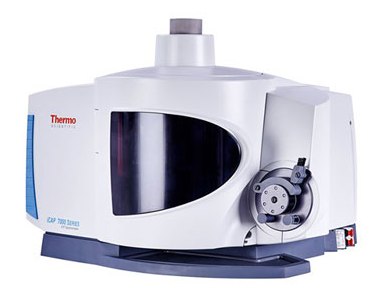
Element Analysis
We operate on ICP-OES device (Thermo Scientific iCAP 7000 Serie) for multi-element analysis, including also (heavy) metals, in solutions, plant tissues, soils, etc..
Supported by: Ing. Šárka Petrová, Ph.D.
Radioisotope Laboratory
Radioisotope laboratories for common alpha, beta and gamma emitters (3H, 14C, 32P, 33P, 35S, 51Cr, 54Mn, 55Fe, 60Co, 63Ni, 64Cu, 65Zn. 90Sr, 99Mo, 109Cd, 125I, 137Cs, 210Pb, 226Ra, Th, U), all in the Laboratory No. 117.
Supported by: RNDr. Mgr. Petr Soudek, Ph.D.
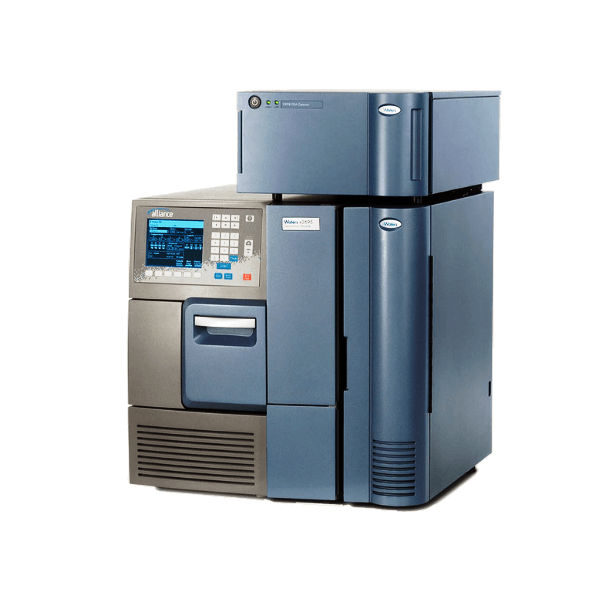
Photosynthetic pigment analysis
We determine chlorophyll and carotenoid content using high-pressure liquid chromatography (HPLC/UV-VIS) from acetone extracts of dry samples. For the separation, we use an acetonitrile/methanol/water gradient, with detection at 445 nm.
Supported by: Mgr. Daniel Haisel, Ph.D.
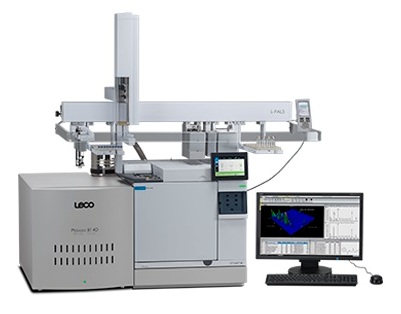
Volatilomics and Metabolomics
We provide precise analysis and quantification of trace compounds (down to ppb levels) even in highly complex mixtures containing thousands of peaks per chromatogram. For our analyses, we employ the LECO Pegasus® 4D GC×GC-TOFMS system.
Supported by: Ing. Jan Rezek, Ph.D.
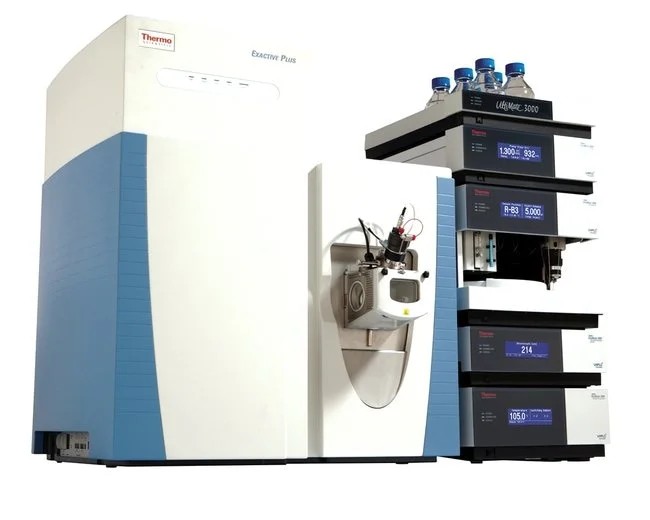
Organic compound analysis
We determine chlorophyll and carotenoid content using high-pressure liquid chromatography (HPLC/UV-VIS) from acetone extracts of dry samples. For the separation, we use an acetonitrile/methanol/water gradient, with detection at 445 nm.
Supported by: Mgr. Petr Maršík, Ph.D.